Current Scientific Methods Can Conclusively Distinguish Between All Microorganisms

If y'all've ever had a smashing idea for something new, then you know some testing is necessary to work out the kinks and make certain yous get the desired issue. When it comes to developing and testing hypotheses in the scientific world, researchers apply an viii-step process known every bit the scientific method to show or disprove ideas that could ultimately lead to more than concrete scientific theories.
Aristotle was the commencement known person to suggest using observation and experimentation to bear witness various hypotheses proposed by scientists, philosophers and mathematicians. Over fourth dimension, his initial ideas were tweaked and improved until they evolved into what we know today equally the scientific method. Before you tackle your next science experiment, allow's take a look at the steps you demand to include to validate your findings.
Observation (Steps One Through 4)
The steps that make upwardly the scientific method generally autumn into three phases: observation, experimentation and determination. The first iv steps in scientific research all fall into the observation stage and include initial observations, asking questions, gathering information and forming hypotheses. The concept is simple: Before y'all can conduct any experiments, you must first observe something in nature that raises questions and prompts you to consider new ideas or solutions to a trouble. In many cases, stride i takes identify without whatsoever witting attempt on the office of the observer.
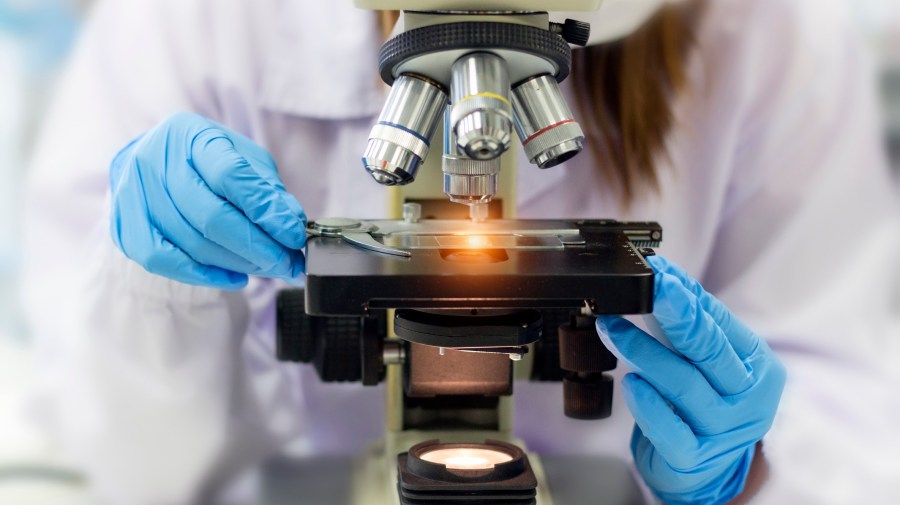
Subsequently observing something that catches your eye, you may decide you desire to know more nigh it, which requires yous to ask a question. Example questions could relate to why something happens or what makes it occur. Request a relevant question is the 2d step in the scientific method.
Next, you want to do some research to discover the respond to the question. For instance, if you lot are wondering why plants respond to sunlight, you would want to thoroughly research the topic of photosynthesis and perform your own experiments to increase your agreement. The inquiry you conduct is the backbone of step iii. In some cases, y'all may observe testify already exists to answer the question without any further effort on your function, just your ain research could lead y'all in a new management and expand on what you already know.
Once you have made an observation, asked a relevant question and carried out your own enquiry, you can complete stride four by developing a hypothesis based on everything you learned. Think of a hypothesis equally an educated estimate. It's based on what seems to be true based on preliminary evidence, only it hasn't been conclusively proven to be true.
The hypothesis is one of the cornerstones of the entire scientific method. It doesn't offering proof when showtime presented, but information technology does crave researchers to clarify the express evidence bachelor and utilize audio logic and reasoning to draw potential conclusions. The bodily statements are typically written in an if/and so format, with scientists predicting the outcomes of future experiments or the causes of particular events. They unremarkably make these predictions based on the results of their ain initial research.

Despite a common misconception, a hypothesis is non the same matter as a theory. If a hypothesis is tested, and the outcome is favorable — in other words, the scientist's initial educated approximate was proven right — so it could eventually become a much more concrete theory. Typically, a hypothesis is tested several times and by different scientists before information technology can be classified as a theory. It's also mutual for scientists to combine several different hypotheses to develop a unmarried working theory.
Experimentation (Step Five)
Once the ascertainment phase is complete, things typically get a piddling more than hands-on in the experimentation phase. As the name would imply, this phase involves conducting tests designed to (hopefully) testify a hypothesis. At this point, scientists and researchers assemble their research, their hypotheses and peradventure even their imaginations and use it all to acquit experiments.
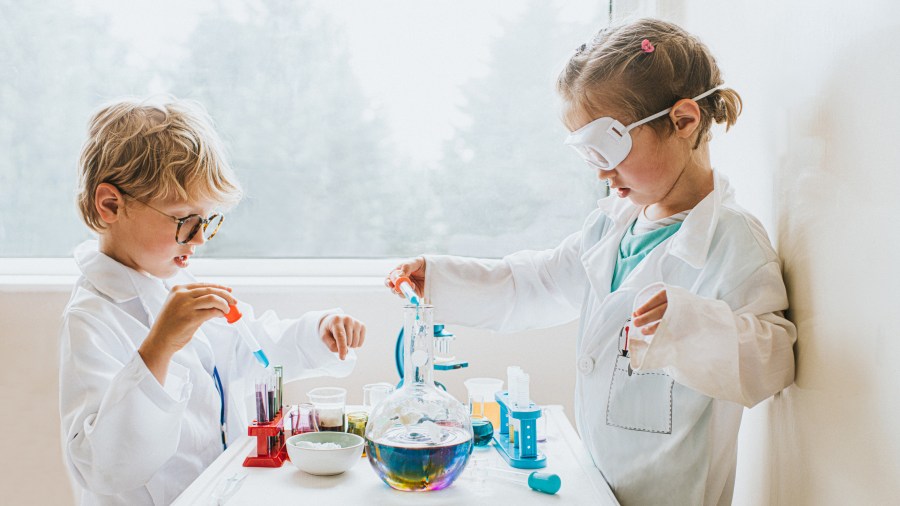
The types of experiments conducted could take many dissimilar forms. Some include elementary observation of a subject, such equally a human or an animal, in their natural surroundings, while others are completely conducted in laboratories. In almost cases, researchers will comport the same experiments several times using dissimilar variables to try to prove their ideas are valid.
Conclusion (Steps Half dozen Through Eight)
Once all the official information has been nerveless and recorded, it's time to initiate the conclusion phase by first analyzing all the information and so forming a conclusion in stride six. If the analysis indicates the results are inconclusive, researchers may choose to repeat certain experiments or conduct new ones.

If the results indicate a definite conclusion, then that conclusion is reported in step seven to the scientific community and mayhap the public. Depending on the type of experiment and the results, researchers may even publish the results and the information in a peer-reviewed medical journal to ensure other researchers in the field are aware of the information.
Finally, the results of associated experiments and the determination drawn will continue to be evaluated (step eight) for potential modifications every bit new experiments are conducted and new evidence emerges over fourth dimension. This stage only stops if the determination is proven to exist a scientific law (doesn't modify over time), such as Newton's laws of motion.
reaganfrearraprou.blogspot.com
Source: https://www.reference.com/world-view/eight-steps-scientific-method-879574b02eaa700b?utm_content=params%3Ao%3D740005%26ad%3DdirN%26qo%3DserpIndex
0 Response to "Current Scientific Methods Can Conclusively Distinguish Between All Microorganisms"
Post a Comment